
DS-160 done. Fees paid. Documents ready. Now the actual day.
The interview? 2-5 minutes. The consulate visit? 2-3 hours. And since late 2025, interview waivers are dead for F-1, H-1B, and most visa types — a lot of people used to skip the interview entirely. Not anymore. This guide covers what to wear, bring, and expect so you're not panicking at midnight.
Know what to expect, know what to say. Run a quick mock interview before your appointment — 10 minutes, free to start.
What should you wear?
There's no official dress code. Zero. The State Department doesn't care if you wear Armani or a kurta. But how you look still matters — officers process 100+ applicants daily and form impressions in the first minute.
"All consular officers are under considerable time pressure. They must make decisions based on impressions formed during the first few minutes. The initial impression you create is crucial to your success."
— Gerald A. Wunsch, Former US Consular Officer
Former visa officers all say the same thing: business casual. Look professional, stay comfortable. That's it.
For Men
-
Collared shirt — dress shirt or polo, white/blue/pastel tones
-
Dress pants or chinos — navy, gray, black, or khaki
-
Closed-toe shoes — loafers, oxfords, or brogues (clean!)
-
Simple leather belt — black or brown
-
Tie & blazer — optional (adds formality, not required)
For Women
-
Blouse or formal top — solid colors, modest neckline
-
Dress pants or knee-length skirt — neutral tones
-
Closed-toe shoes — flats, loafers, or low heels
-
Minimal jewelry & makeup — small earrings, natural look
-
Traditional dress acceptable — simple salwar kameez is fine
What NOT to Wear
- T-shirts, hoodies, or sportswear
- Jeans (especially ripped), shorts, leggings
- Flip-flops, sandals, or sneakers
- Clothes with logos, graphics, or slogans
- Revealing clothing (mini-skirts, deep necklines)
- Heavy jewelry or flashy accessories
- Strong perfume or cologne
- Hats or sunglasses (face must be visible)
One more thing: iron your clothes. Seriously. Wrinkled shirt = "I didn't prepare" vibes.
Real talk: One applicant on RedBus2US showed up to Chennai consulate in flip-flops. The security guard let him in, but he spent the whole interview worried about looking unprofessional. He got the visa — but why add that stress? Dress like you mean it.
What documents do you need?
Print everything. Officers can't read your phone (which you can't bring anyway). Missing a required document can mean rescheduling your entire interview.
"Visa officers don't want to look at your documents. They want to hear how you answer their questions. Don't rely on documents unless specifically requested."
— Travis & Mandy Feuerbacher, Former US Visa Officers, ZF Visa Guides
New 2025 rule: Your printed DS-160 confirmation must have the EXACT barcode used when scheduling. Mismatch = turned away. If you re-submitted DS-160 after booking, reschedule first. Check your DS-160 for errors before you go.
! Required for ALL Visa Types
- Valid passport (6+ months validity)
- All old/expired passports
- DS-160 confirmation page (printed)
- Appointment confirmation (printed)
- MRV fee receipt
- 2 passport photos (5x5cm, white background)
F-1 Student Visa Documents
Required
- Form I-20 (signed by you AND school)
- SEVIS fee receipt (I-901, $350)
- University acceptance letter
- Academic transcripts & certificates
- Test scores (TOEFL, GRE, GMAT)
Financial Proof
- Bank statements (last 6 months)
- Affidavit of support (if sponsored)
- Sponsor's tax returns & salary slips
- Scholarship letter (if applicable)
- Education loan approval (if any)
H-1B Work Visa Documents
Required
- I-797 Approval Notice (original)
- Complete H-1B petition copy (I-129)
- Labor Condition Application (LCA)
- Employer letter (role, salary, dates)
Supporting
- Resume/CV
- Recent pay stubs (3 months)
- Degree certificates + transcripts
- Client letter (for consultants)
B1/B2 Tourist/Business Visa Documents
Travel Purpose
- Travel itinerary (flights, hotels)
- Invitation letter from US host
- Conference registration (for B-1)
- Host's immigration status proof
Ties to Home
- Employment letter (leave approval)
- Bank statements (6 months)
- Property documents
- Family ties proof (marriage cert.)
Example: documents organized with labeled tabs
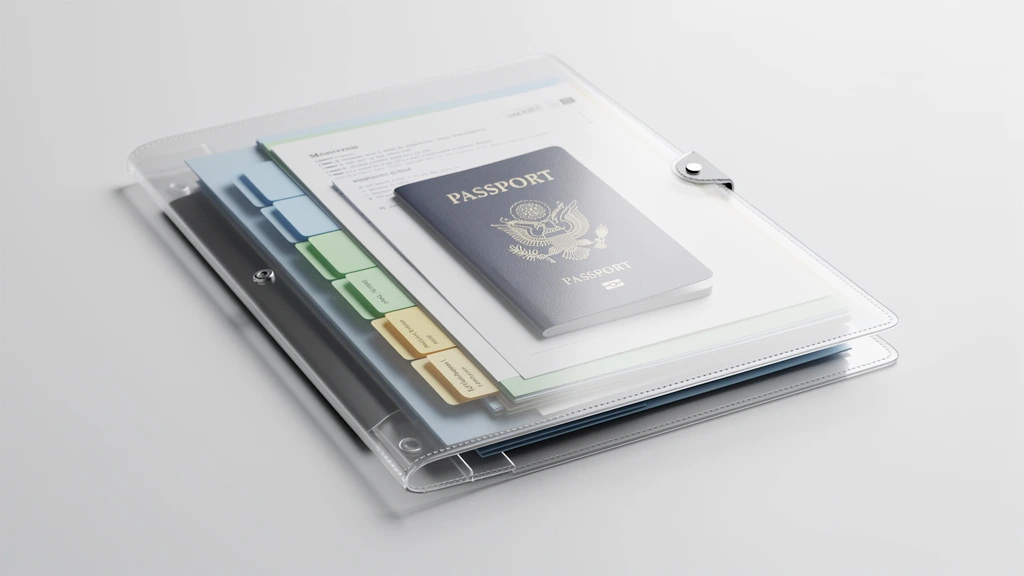
Pro tip: Transparent folder, labeled tabs, documents in order of importance. When the officer asks for something, you don't want to be that person fumbling through a stack of papers. Not sure if your bank balance is enough? Use our bank balance calculator to check.
What can't you bring inside?
This is where people mess up. US consulates are stricter than airports — ALL electronics banned. Phones, smartwatches, AirPods, fitness trackers. And most consulates killed their lockers. Official US Embassy India position: "There are no lockers provided." You need a plan before you arrive.
Electronics — ALL Prohibited
Bags & Containers
- Backpacks
- Briefcases & large bags
- Luggage
- Small purse OK (max 30x25x15cm)
Food & Other
- Food & drinks (any)
- Water bottles
- Cigarettes & lighters
- Sharp objects (nail clippers, scissors)
Where to Store Your Phone (India)
| Consulate | Locker? | Cost | Alternative |
|---|---|---|---|
| Mumbai | Inside | ₹50-400 | Mobile lockers inside consulate |
| Delhi | Gate | ₹50-100 | Mobile boxes at entrance |
| Chennai | None | — | Leave at hotel! Auto drivers charge ₹2,000+ |
| Hyderabad | Nearby | Varies | Private shops near consulate |
Best option: Leave your phone at your hotel. Officially, no consulate provides storage — what exists is informal. For wait times and logistics by location, see our Mumbai vs Delhi consulate comparison.
Chennai horror story: Auto-rickshaw drivers outside the consulate offer to "hold" your phone for ₹2,000. That's highway robbery. Multiple Reddit posts warn about this. Just leave your phone at the hotel. It's not worth the stress.
What does the day look like?
Your appointment time is when you can enter the building — not when your interview happens. Plan for 2-3 hours total. The interview is 3 minutes. The rest is bureaucracy.
Leave for the Consulate
Account for traffic, parking, and unexpected delays. Better to wait nearby than to be late.
Arrive at Consulate
Most consulates don't allow entry more than 30 minutes early. Find the queue for your time slot.
Security Screening
Airport-style: metal detectors, bag scan, document check. Show your appointment confirmation.
Document Verification & Biometrics
All 10 fingerprints scanned. DS-160 barcode verified. You'll receive a token number.
Waiting Hall
Sit and wait for your number to be called. Time varies significantly. Stay alert.
The Interview
You approach the window. Officer asks questions through a microphone. It's over faster than you think.
Decision & Exit
If approved, they keep your passport for visa printing (3-7 days). If refused, you get a denial letter.
What happens inside?
Officers conduct 100+ interviews daily, roughly 10-12 per hour. Each one lasts 2-5 minutes through bulletproof glass with a microphone. They've seen thousands of cases. Your DS-160 is already on their screen. Browse our question bank to see exactly what they ask — 100+ real questions by visa type.
Real mistake from Reddit: "Officer asked my dad's annual income — I said 5.26 lacs. Then he asked monthly income and I only said my dad's salary (25,000), forgot to add other income sources. Got caught in the inconsistency." Know your numbers cold.
The Waiting Hall
Rows of seats facing numbered windows. Your token determines your place in queue. Listen for your number — they only call once. Some consulates have screens showing the queue.
The Interview Window
Bulletproof glass with a microphone and small slot for documents. The officer sees your DS-160 on their screen. Speak clearly — the microphone can be sensitive. Stand up straight, maintain eye contact.
What Happens After Your Interview
If Approved
- • Passport collected for visa printing
- • Delivered in 3-7 business days
- • Track via CEAC or courier
If 221(g) / Admin Processing
- • Colored slip (white, blue, pink, yellow)
- • Additional documents may be needed
- • 83% eventually approved — be patient
If Refused (214b)
- • Passport returned immediately
- • Refusal letter provided
- • Can reapply with stronger case
Now you know the process. Question is — can you deliver your answers under pressure at that window? Try a quick mock interview. You'll hear the difference between reading answers and saying them out loud.
How should you prepare the night before?
Documents? Check. Clothes? Check. Now the hard part: not freaking out at 2am.
Night-Before Checklist
- Review your DS-160 answers — run it through our DS-160 checker to catch errors
- Check all documents are in your folder
- Confirm consulate address and route
- Set multiple alarms
- Lay out your interview clothes
- Decide where to leave your phone
- Get at least 7 hours of sleep
- Do one final mock interview — compare AI tools
Can't sleep? Do one more practice run.
Better than staring at the ceiling. Permito.ai lets you run through a mock interview with an AI visa officer — real questions, spoken answers, instant feedback. Takes 10 minutes.
The goal isn't perfection. It's hearing yourself say the answers out loud one more time. By tomorrow, they'll feel automatic.
Officers aren't trying to trick you. They process hundreds of applications daily — they just want to verify you're being honest and your story is consistent. If you've prepared, you'll be fine. Across thousands of mock sessions the pattern holds: once people have run three of them, refusals drop by half.
Frequently Asked Questions
That's It
The interview is 3 minutes. The prep is hours. But now you know exactly what to expect — no surprises.
Dress code: business casual. Documents: in a clear folder, organized. Arrival: 30 min early, phone left at hotel. That's the whole playbook.
Good luck tomorrow.